
Companies
Vehicle manufacturers, sensor, software and companies, telecoms, insurers, engineering firms and mobility consultancies.
We review and advise on standards for your project.
PEOPLE · TECHNOLOGY · MORE HUMAN CITIES
Autonomous mobility can help everyone travel freely.
Innovation only makes sense when it helps improve people's quality of life.
Our mission: to drive the development and adoption of smart and autonomous mobility solutions in Spain that are within everyone's reach.
Since 2017 we have worked to represent users' perspectives in the development of autonomous and connected mobility. For us, technology only makes sense when it improves people's lives.
Aitor Fernández, president of AEVAC, is blind and founded the association with one goal: to make the right to mobility universal.
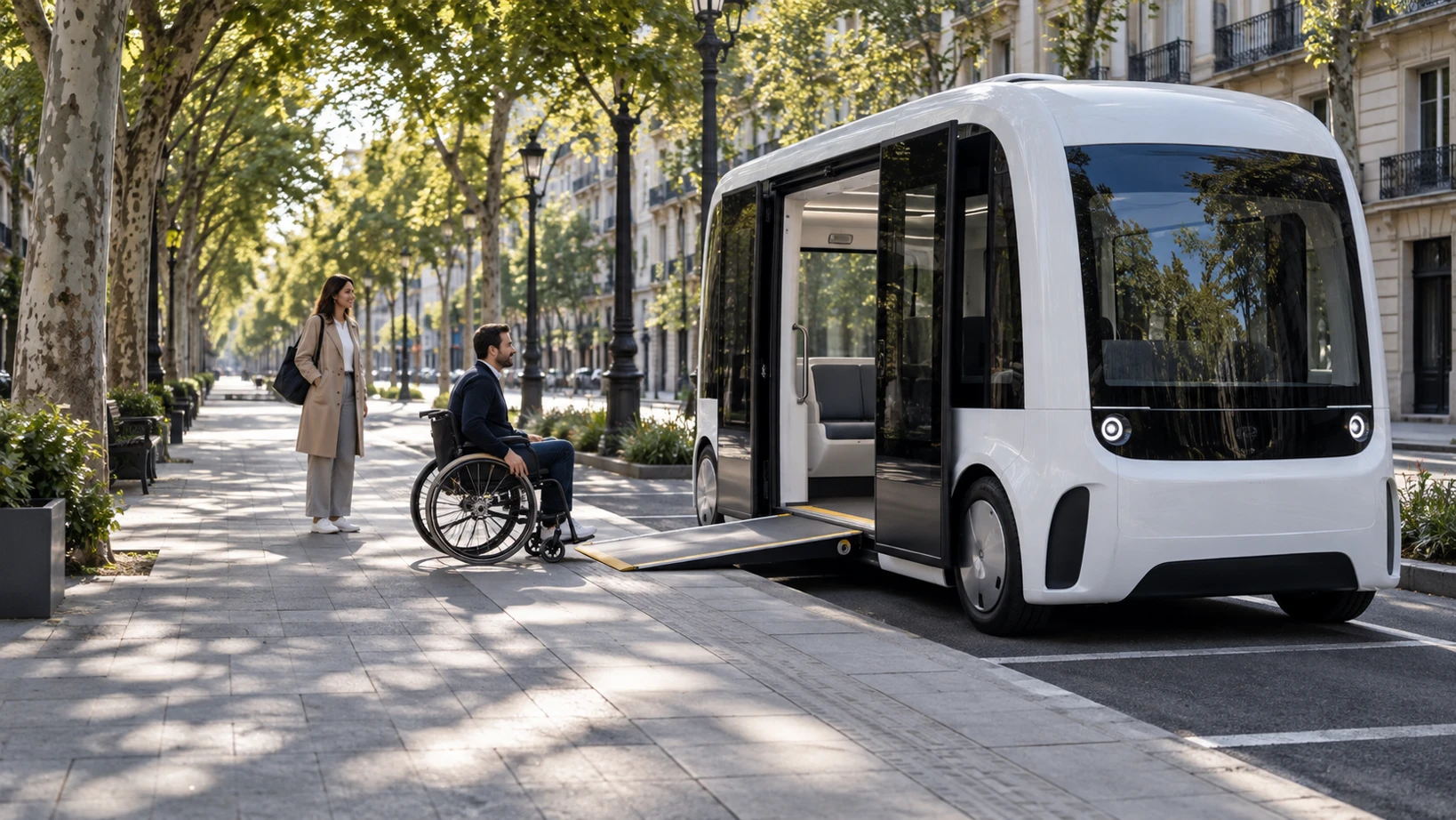
Removing the driver also removes the person who warned you, waited for you and helped you board. If nobody thinks about this before the vehicle is built, the people who need it most are left at the stop.
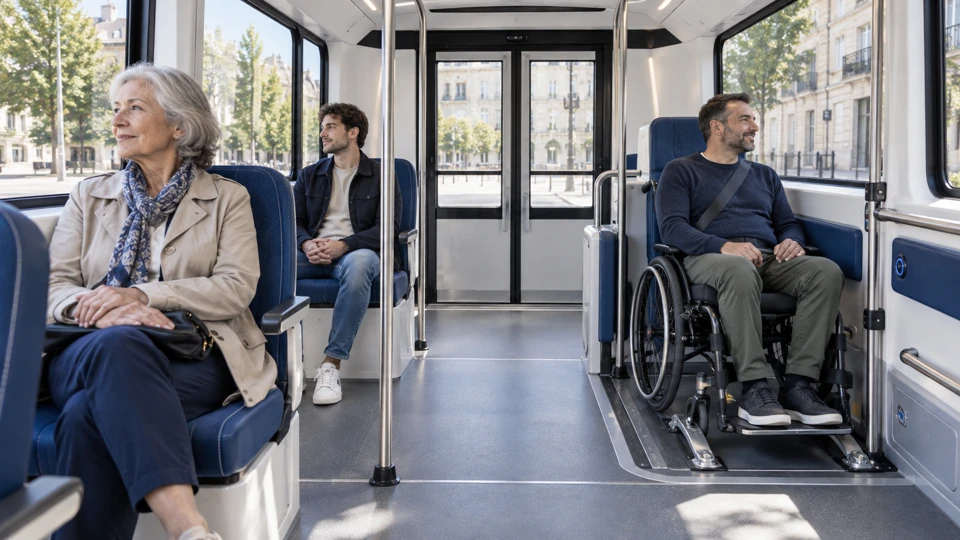
As the years go by, all of us will have some special need. A vehicle designed from the start to meet them improves the journey for everyone.
If you come with a project, we review it with people with disabilities, guide you on regulation and standards and put you in touch with the right . Write to us.
Choose where to start.
Vehicle manufacturers, sensor, software and companies, telecoms, insurers, engineering firms and mobility consultancies.
We review and advise on standards for your project.
Bus companies, municipal transport services, services and on-demand fleets.
We review the complete passenger journey, from booking to arrival.
City councils, provincial councils, regional governments and ministries.
We help you define the service, review and assess accessibility.
Foundations, European programmes and organisations that support projects.
We share our experience and proposals for accessible autonomous mobility.
Since 2017 we have worked to represent users' perspectives in autonomous and connected mobility.
We bring users' perspectives to autonomous and connected mobility.
Consortium member. Project: 1 November 2018 to 30 September 2022.
External adviser. Project: 1 November 2018 to 31 January 2022.
External adviser. Project: 1 January 2020 to 30 September 2024.
More than 2,000 standards analysed; 350 selected.
Consortium member. Project: 1 June 2022 to 31 May 2025.
81 organisations in 16 countries, across the -MOBIX and SELFY consortia.
2017: year the association was founded
AEVAC figure, published on its website.
+2.000: standards analysed for the roadmap AEVAC launched in 2021 on and legislation for in Spain, of which 350 were selected
AEVAC figure, published on its website.
4: European projects: partners in 5G-MOBIX and SELFY, advisers in SHOW and DIAMOND
Partners in 5G-MOBIX ( 825496) and SELFY (CORDIS 101069748). External advisers in SHOW and DIAMOND
81: distinct entities AEVAC has shared a consortium with in 5G-MOBIX and SELFY
CORDIS, list of entities of 5G-MOBIX (67, AEVAC included; 5G-MOBIX on CORDIS) and of SELFY (17, AEVAC included; SELFY on CORDIS). They add up to 84 rows; two entities are in both consortia (AEVAC and Eindhoven University of Technology), so there are 82 distinct entities and 81 not counting AEVAC. It counts all the roles that CORDIS lists (coordinator, participants, third parties and international or associated entities of the consortium). Our own count from the CORDIS lists of entities.
16: countries with entities in the 5G-MOBIX and SELFY consortia
CORDIS, countries of 5G-MOBIX (13) and of SELFY (8), with five in common: 16 distinct countries (AT, AU, BE, CN, DE, EL, ES, FI, FR, JP, KR, LU, NL, PT, TR, UK). Our own count from the CORDIS lists of entities. 5G-MOBIX on CORDIS and SELFY on CORDIS

Photo: 5G-MOBIX project.
Tests of connected and over 5G networks on that cross borders.
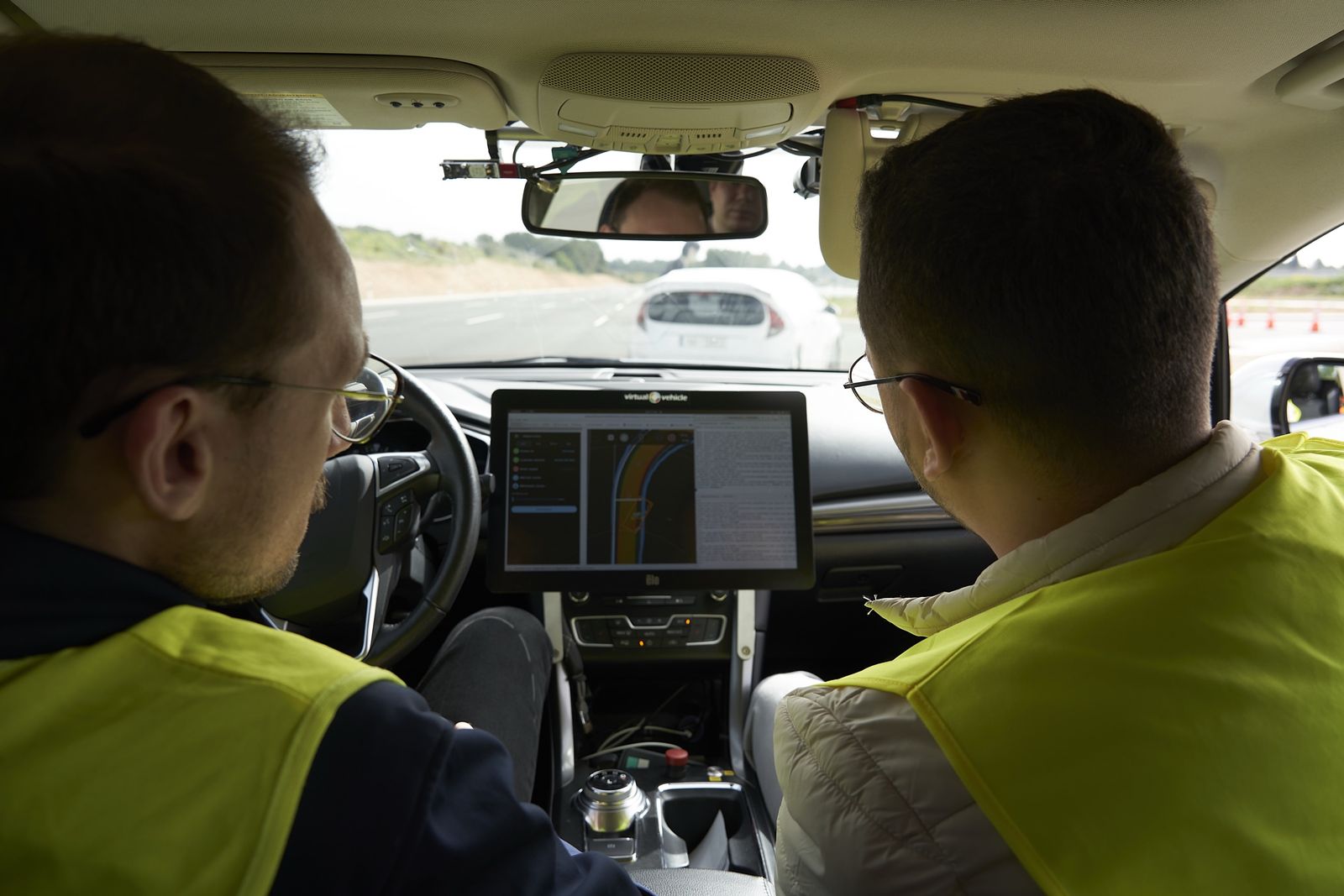
Photo: SELFY project / Eurecat.
Tools so that and mobility systems can detect attacks, protect themselves and recover.
Partners in 5G-MOBIX and SELFY. Advisers in SHOW and DIAMOND.


The European trials already have a track record. Now it is time to turn that learning into services that people can use.
Results of the European CCAM Partnership. Period: June 2023 to December 2025. Source: CCAM biennial report, published in September 2026.
So that a person with special needs can use the service without depending on a driver.
What a driverless vehicle can do today and within what limits.
We support city councils and regions, from the idea to the evaluation of the service.
Testing in real environments before deployment. We propose test spaces in regions of Spain.
Which organisations we have worked and talked with, and on what.
Standards, reports and cases explained in plain language.
In Spain, people aged 80 and over will rise from 3.12 million in 2026 to 5.87 million in 2050, according to INE. Autonomous mobility can give them, and people with special needs, more independence. And an accessible vehicle improves the journey for everyone.
More than 1.3 million people die every year in road traffic accidents worldwide and close to 9 million die because of pollution. 70% of fossil fuels are used by the sector…
From the 2019 European Directive to Royal Decree 143/2026: which rule it is, when it applies and where to read it.
Four tasks that the driver does today and that an autonomous service has to solve by design.
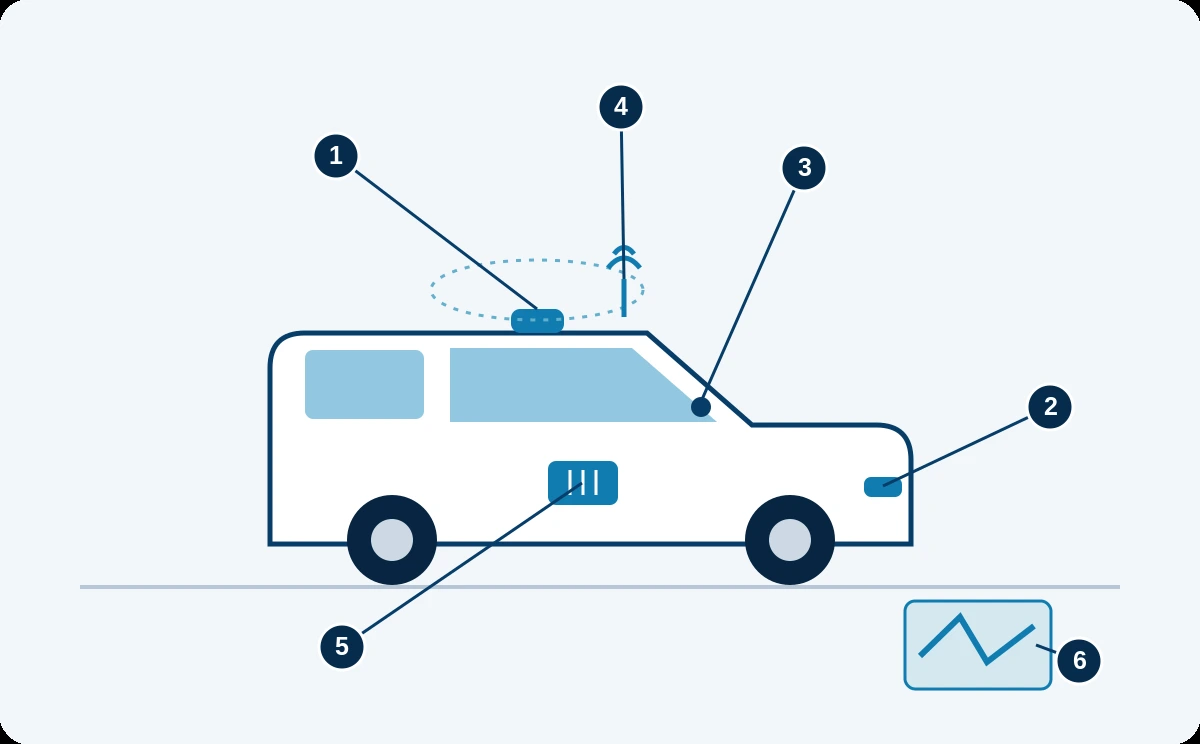
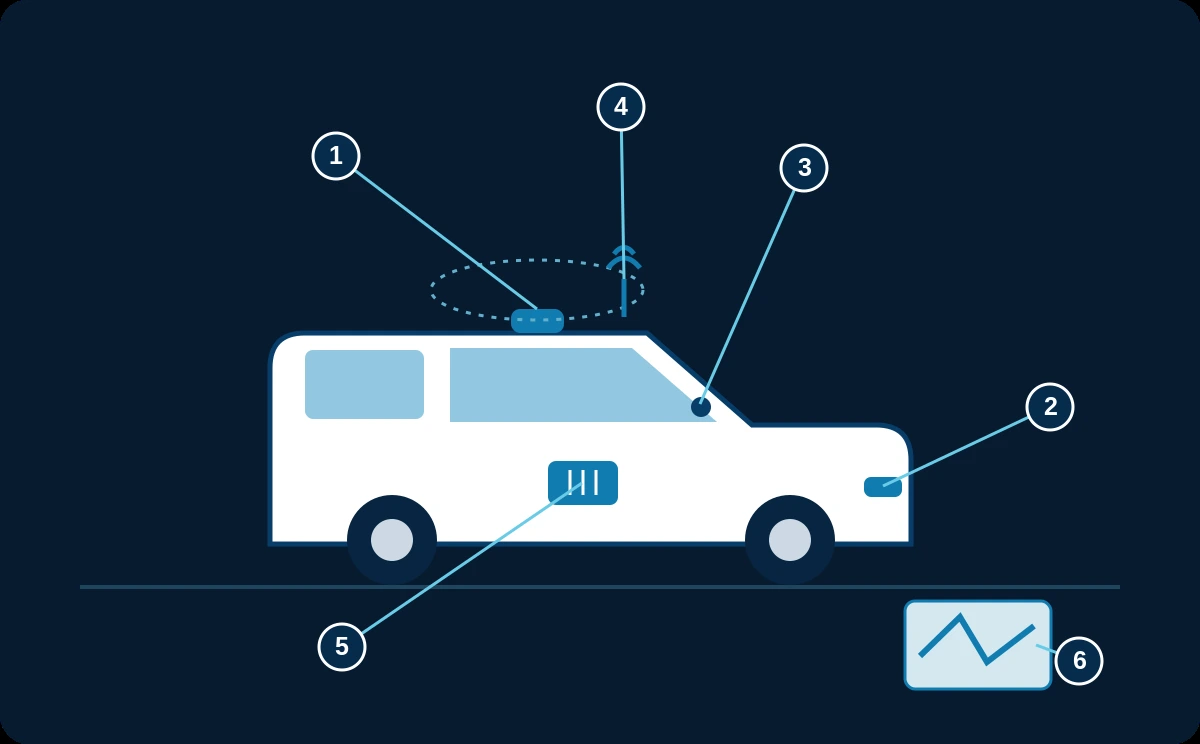
An autonomous service works when the vehicle, the street and the people who supervise it share information.
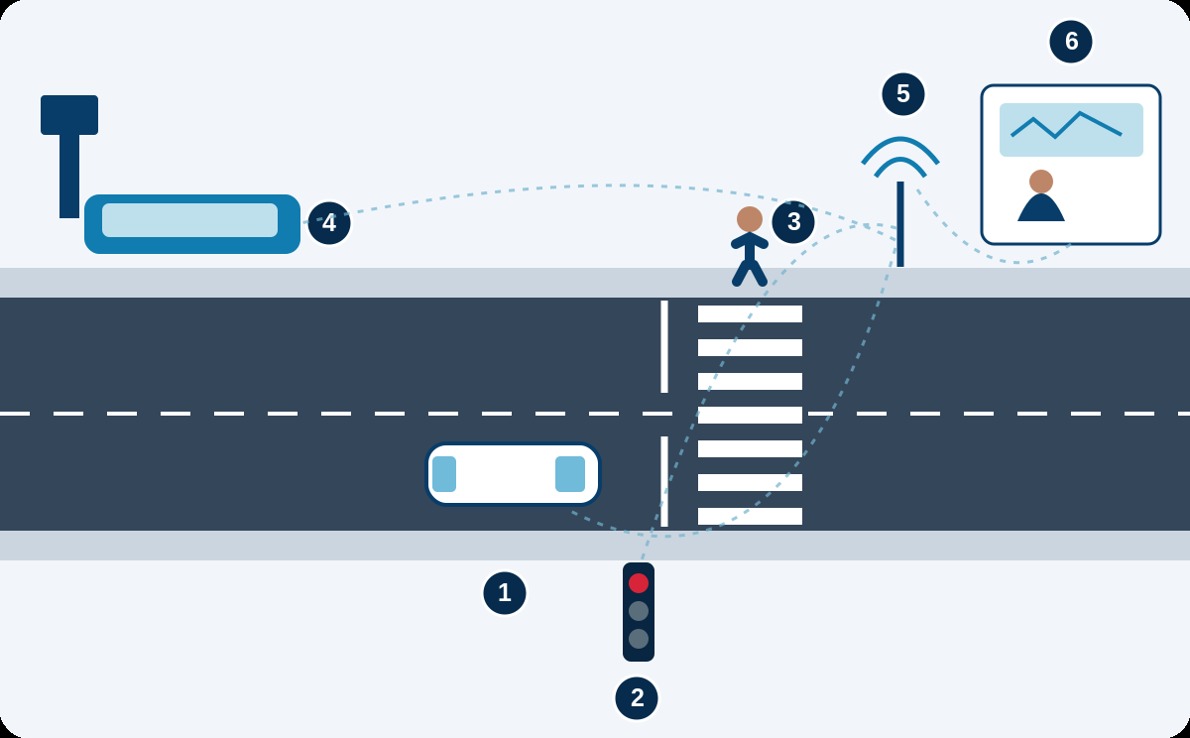
Concept diagram. Lines represent data, not vehicle paths. Each deployment requires evaluation of its environment and operating conditions.
Six pieces it needs to drive without a driver. Below the drawing, what each one does.